
Three full days. Four if you're coming in festival season.
That's the answer, and it's not a hedge. Cartagena's walled city is small: you can cross it on foot in about twenty minutes, and San Diego to Getsemaní is a ten-minute walk. So the city itself doesn't need a week. What eats time here is the water, because any island trip is a half day minimum and the good one is a full day. Three days lets you do the walls properly, one night out in Getsemaní, and one day on a boat, without spending your holiday in transit.
Book two nights and you'll leave feeling like you were here for an afternoon. Book five and you'll start inventing errands, unless you've come for a festival or you genuinely want to lie by water for two of them, in which case go ahead.
Day one: inside the walls, on foot, badly dressed for it
Don't plan this day. Walk out and get lost, because the grid is small enough that getting lost is a twelve-minute problem. Two things are worth actually aiming for.
Museo del Oro Zenú on Plaza de Bolívar is free, one floor, air conditioned, and holds pre-Columbian goldwork from the Zenú people who engineered the canals across the Sinú floodplains long before our walls existed. Forty minutes, no ticket queue. It's closed on Mondays, which catches out roughly everyone.
Las Murallas, the city walls, are free and open and best at about an hour before sunset when the stone stops radiating heat. Walk them, don't just photograph them. This is the single thing we'd refuse to let you skip.
End it on Plaza de San Diego, the small square our door opens onto on Carrera 7. It fills with restaurant tables after dark and it's the least frantic of the Old Town squares, which is why we live on it.
Day two: Getsemaní after dark
Getsemaní is the neighbourhood just outside the walls, and it's where the night actually happens: painted walls street by street, doorway bars, people playing on plaza steps rather than a stage. It's a ten-minute walk from us, or two dollars in a taxi if you've done enough steps.
Go in the late afternoon for the street art while there's light, eat there, stay out. Our one piece of advice: don't try to combine Getsemaní with a big day trip on the same day. You'll do both at half strength.
Day three: the water
Pick one, not both.
Tierra Bomba is the half-day version. It's the island straight across the bay, the boat takes about ten minutes, and a day pass at Blue Apple Beach, our beach club over there, is $40 per person with the transfer. Boats leave the city at 10am, 11:30am and 5pm. You're back for a shower and dinner.
The Rosario Islands are the full-day version, further out, clearer water, and a much longer round trip. Worth it if you want that specific colour of blue, but it's a day you don't get back.
If you only have three days, we'd take Tierra Bomba and use the recovered afternoon to walk the walls again. Unpopular, correct.
When to stay longer
Two windows justify four or five nights. November brings the independence festivities, when the city stops being a museum and starts being a street party for several days. January is the dry month and brings both the classical music festival and the literary one, which is also when rooms fill and rates climb, so book early or not at all.
September and October are the opposite trade: quietest, cheapest, and you'll lose an hour most afternoons to rain. We think that's a good deal. Three days still works, you just do the museums when the sky opens.
Only have two days? Cut this.
Cut the islands. All of them. Two days is walls, Getsemaní, and eating properly, and that's a genuinely good short trip. Trying to squeeze a boat into it means one rushed morning and a whole day of feeling behind.
Also worth knowing: we have ten rooms, so short notice in high season rarely works out. And breakfast is included when you book with us directly, which on a two-day trip is one less decision before 9am.
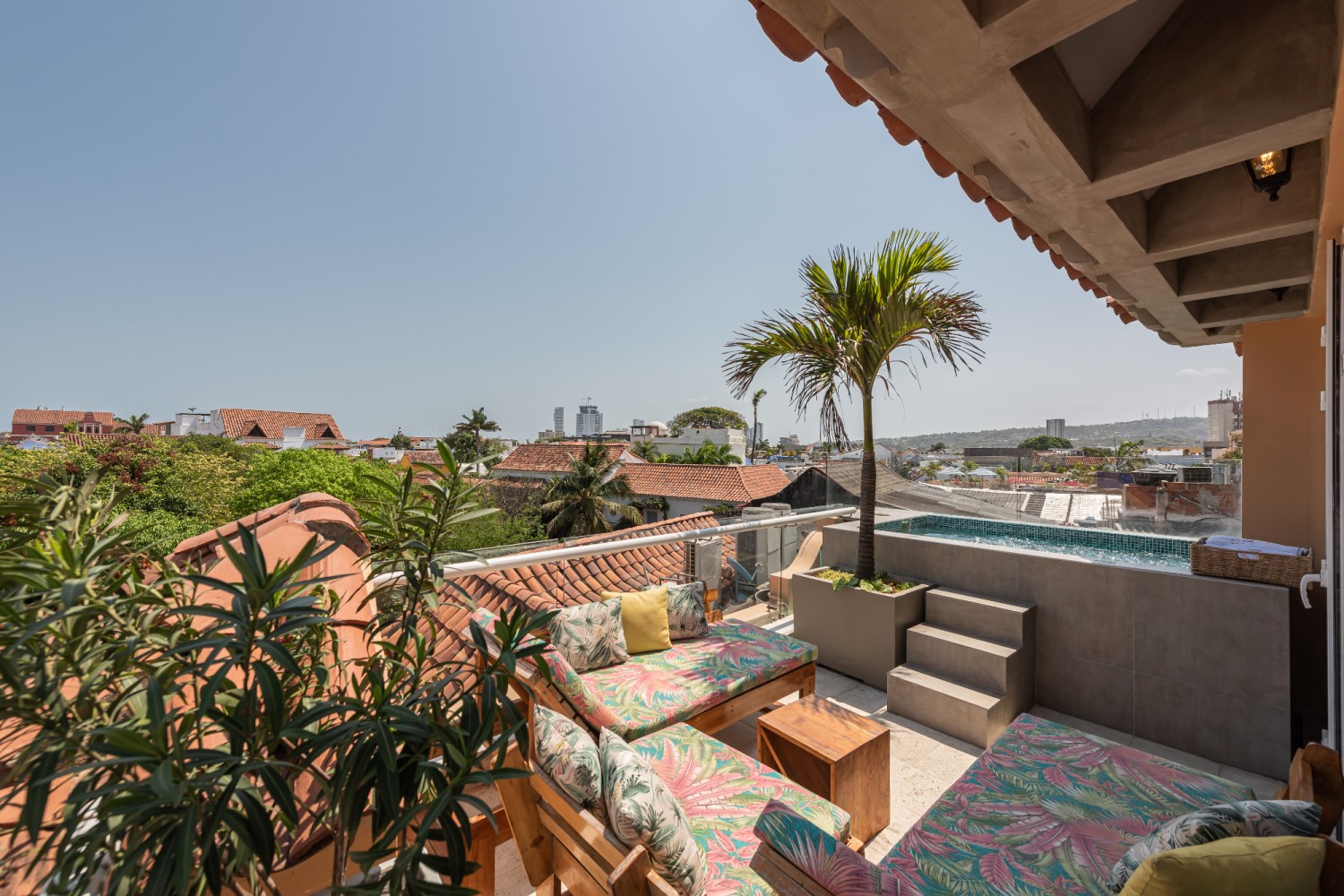
Head up to the rooftop on your first night rather than saving it for the last. It's open till midnight, locals get 15% off up here too, so expect real company at sunset. If you want quiet and colonial hush, we're probably not your spot.